
The 2 Imambaras of lucknow
Symbol of History and Faith
The Bada Imambara, is also known as the Asafi Imambara, Built by Nawab Asaf-ud-Daula in 1784,an architectural marvel and a site of profound historical and religious significance. This grand structure, located in Lucknow, India,offers visitors a deep insight into the rich cultural heritage of the region and the mouring commemorations for Imam Hussain(as).Bada Imambara @ Wiki
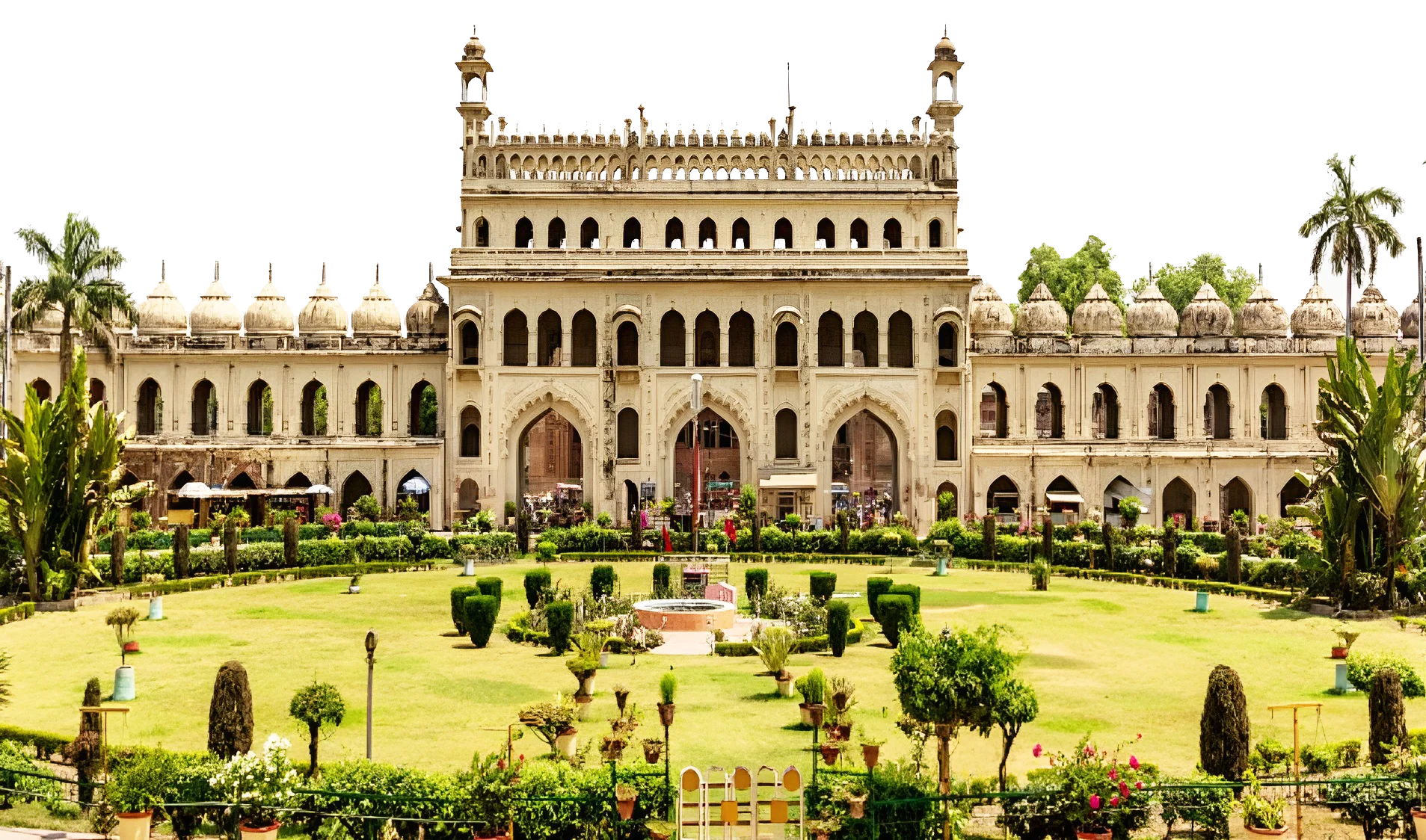
Chhota Imambara, or Imambara Hussainabad Mubarak is a monument located in the city of Lucknow, Uttar Pradesh, India. It took 54 years to build. Built as an imambara, or a congregation hall for Shia Muslims, by Muhammad Ali Shah, the Nawab of Awadh in 1838, it was to serve as a mausoleum for himself and his mother, who is buried beside him.Chota Imambara @ wiki


Discover Imam Hussain (a.s.)
The Beacon of Truth, Justice & Humanity — Understanding the sacred personality, moral revolution, and supreme sacrifice of the Grandson of Prophet Muhammad (s.a.w.w.) and son of Imam Ali (a.s.) & Syeda Fatima (s.a.) that inspired the majestic Imambaras of Lucknow and awakened human conscience worldwide.

Sublime Character & Life
Devotion and Humility: Born in Medina in 626 A.D. (4 A.H.), Imam Hussain (a.s.) was nurtured in the lap of the Holy Prophet. He secretly carried sacks of provisions across Medina at night to feed destitute families and orphans.
Compassion for All: He sat on the dust with the impoverished, shared their simple meals, and taught that true greatness lies in service to humanity and sincere devotion to the Almighty.
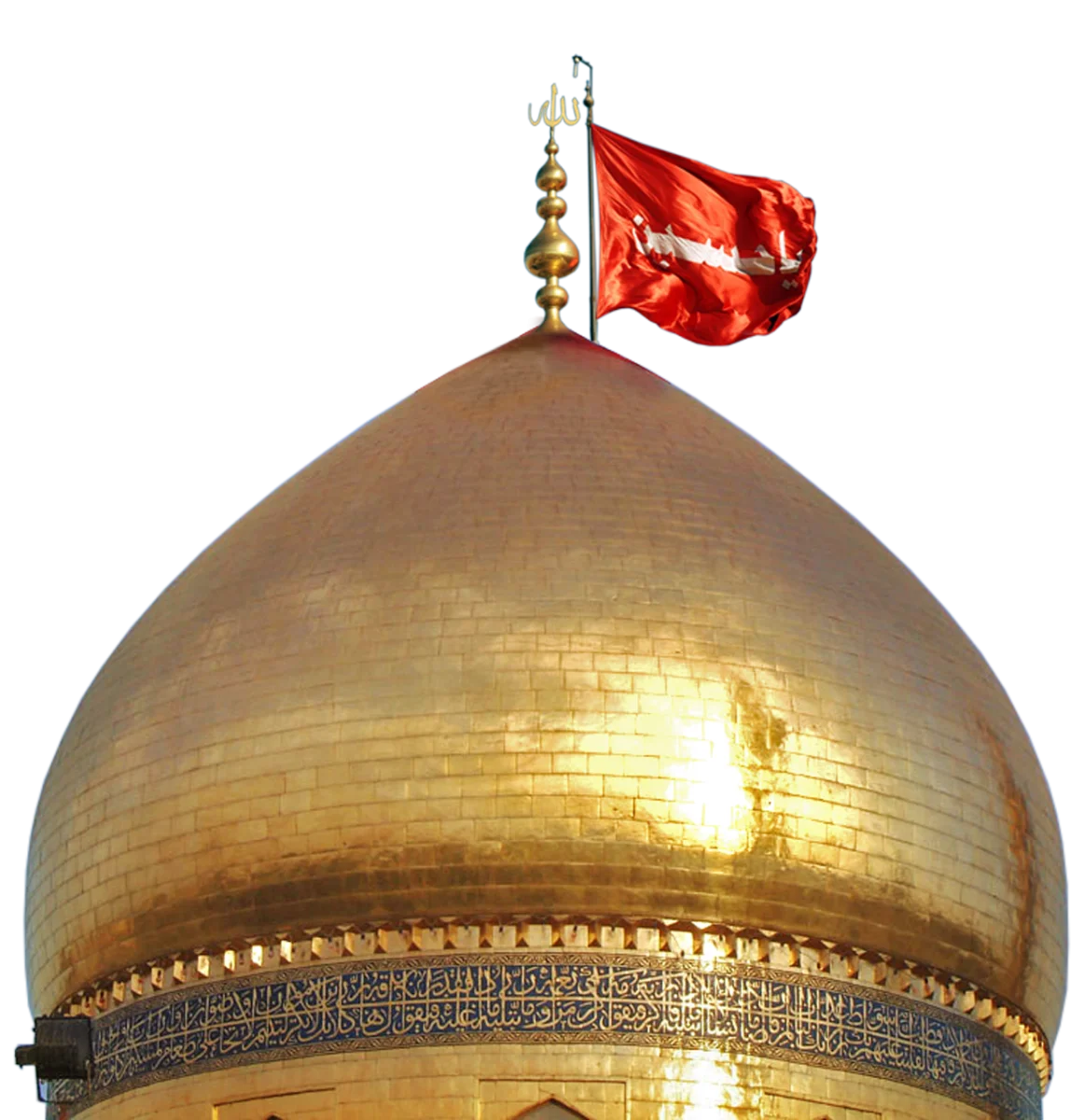
The Stand at Karbala
Refusing Tyranny: In 680 A.D. (61 A.H.), when despot Yazid demanded allegiance to legitimize oppression, Imam Hussain (a.s.) famously refused: “A man like me can never pledge allegiance to a man like him.”
Supreme Sacrifice: Deprived of water for 3 days alongside 72 loyal companions—including Hazrat Abbas (a.s.) and 6-month-old Ali Asghar (a.s.)—he gave his life to preserve human dignity.

Living Memory in Lucknow
Eternal Legacy: Following Karbala, his sister Syeda Zainab (s.a.) preserved the truth through fearless sermons in Kufa and Damascus, ensuring the message resonated across generations.
Sanctuary of Commemoration: The Nawabs of Awadh built Lucknow's monumental Imambaras as sanctuaries of universal mourning (Azadari), charity, and interfaith solidarity that endure to this day.
Sayings of Imam Hussain (a.s.)
Universal words of wisdom on freedom, honor, and human dignity.
4 Moral Pillars of the Movement
Core ethical principles that guide global struggles for justice.
1. Universal Justice (Adl)
Standing firmly against tyranny and demonstrating that righteousness is a timeless moral duty across all civilizations.
2. Human Dignity (Hurriyat)
Proving that a principled stance grounded in truth overcomes overwhelming material power.
3. Supreme Compassion (Ithar)
Providing water even to the thirsty cavalry of the opposing forces before battle, exemplifying boundless mercy.
4. Interfaith Harmony
Inspiring people of diverse faiths—Hindus, Muslims, Sikhs, and Christians—who unite in Lucknow each year to honor his memory.
Tributes by World Luminaries
How global thinkers, poets, and leaders drew inspiration from Imam Hussain (a.s.).
“I learned from Hussain how to achieve victory whilst being oppressed. If India has to be a liberated country, she must follow the footsteps of Imam Hussain.”
“In order to keep alive the idea of justice and love, every century needs an event like Karbala to awaken the moral conscience of mankind.”
“I spent more than 20 years in prison... and when I was about to give up, I thought of Imam Hussain and Karbala, and it gave me the strength to stand for freedom.”
“If Hussain had fought to quench worldly desires... then I do not understand why his sister, wife, and children accompanied him. He sacrificed purely for humanity.”
“Though Imam Hussain gave his life centuries ago, his noble soul lives on and rules over the hearts of people even today as an eternal beacon of truth.”
“No battle in the modern and past history of mankind has earned more sympathy and admiration than the martyrdom of Hussain at Karbala.”
What is an Imambara?
An Imambara, also known as 'Husainiyah', or 'Ashoorkhana', is a dedicated place
where Muslims gather to commemorate the martyrdom of Imam Hussain (a.s.), the son of
immaculate parents, Ali (a.s.) and Fatima (s.a.), and the third of the twelve Holy Imams in
Shia Islam.
Imam Hussain (a.s.) was mercilessly martyred in Karbala, Iraq, on 10 Muharram 61
AH (Ashura), along with his family and companions.
In this unparalleled, divinely ordained
test, he willingly sacrificed everything a human being can offer.
As God's error-free
Vicegerent on earth and the Inheritor of all guidance progressively revealed to mankind
through Adam, Noah, Abraham, Moses, David, Jesus, and Muhammad (peace be upon them all), his
unique and supreme sacrifice prevented God's Religion from obliteration, ensuring continued
pristine guidance for the salvation of humanity. Thus, truth, justice, and freedom were
preserved as virtues, distinctly separated from Falsehood and Injustice.
The significance of "Panjetan," the holy five, is emphasized with five main doorways in Chota Imambara. There is a Shehnasheen (a platform where the Zarih of Imam Husain is kept.) Zarih is the replica of that protective grill or structure which is kept on the grave of Imam Husain at Karbala, Iraq.
The Construction of the Asafi Imambara
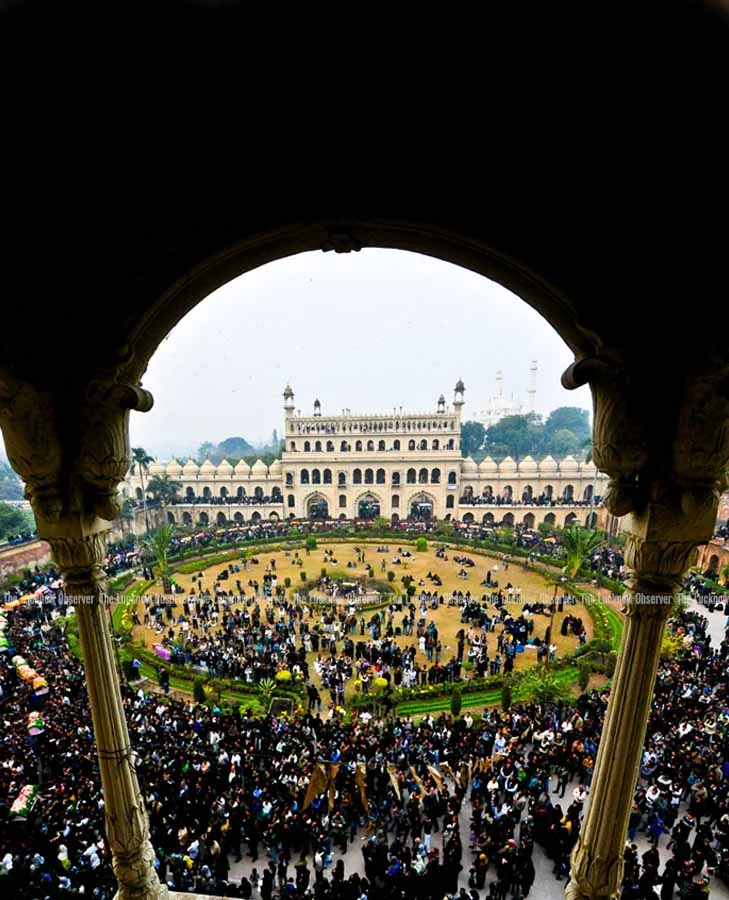
Commissioned by Nawab Asaf-ud-Daula in 1784, the Bada Imambara was constructed as a means to provide employment during a severe famine. This massive project employed around twenty thousand workers and took six years to complete, costing approximately 15 million silver coins. The construction also accommodated the participation of needy men and women from respectable families, who worked discreetly at night.
Architectural Splendor
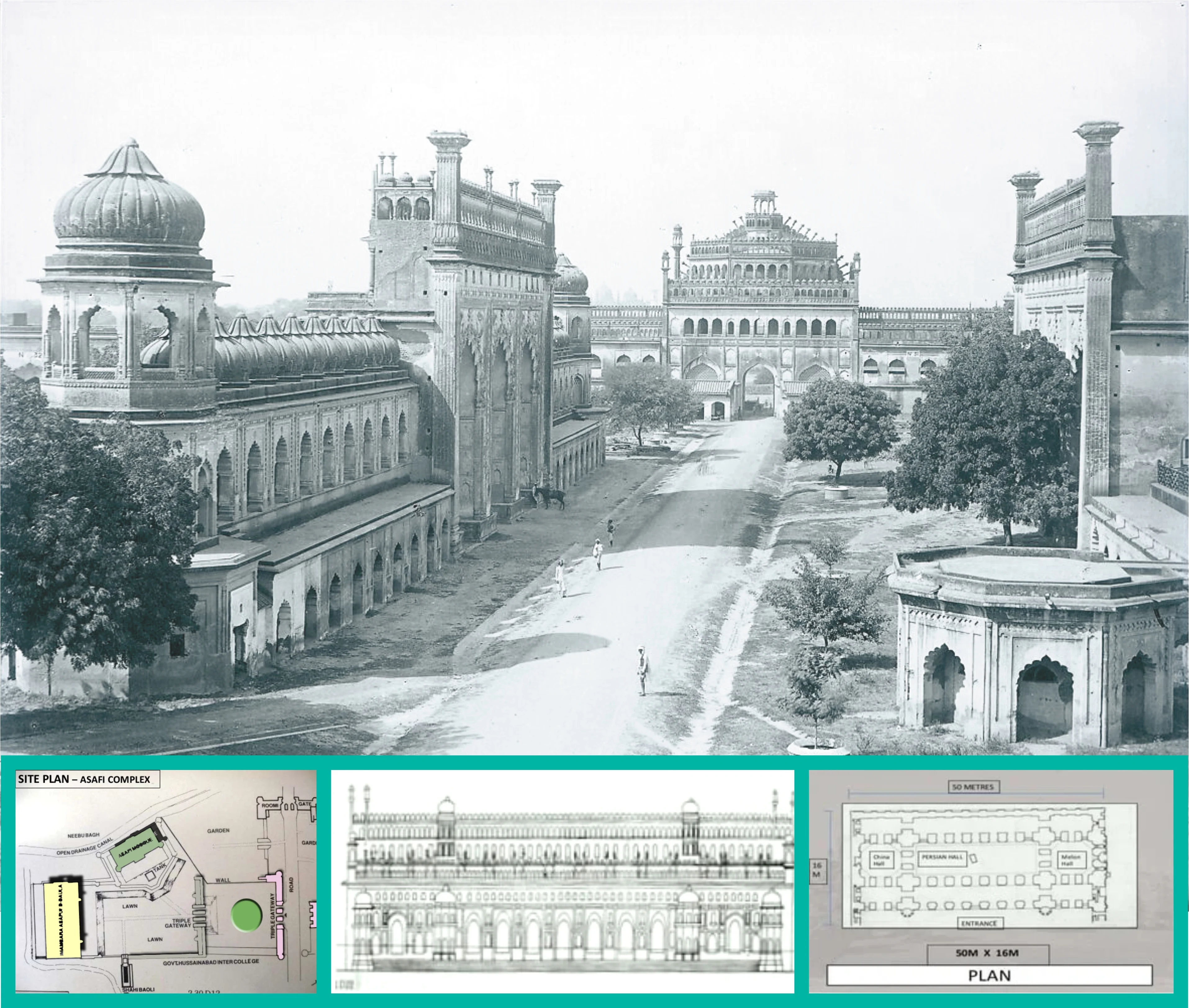
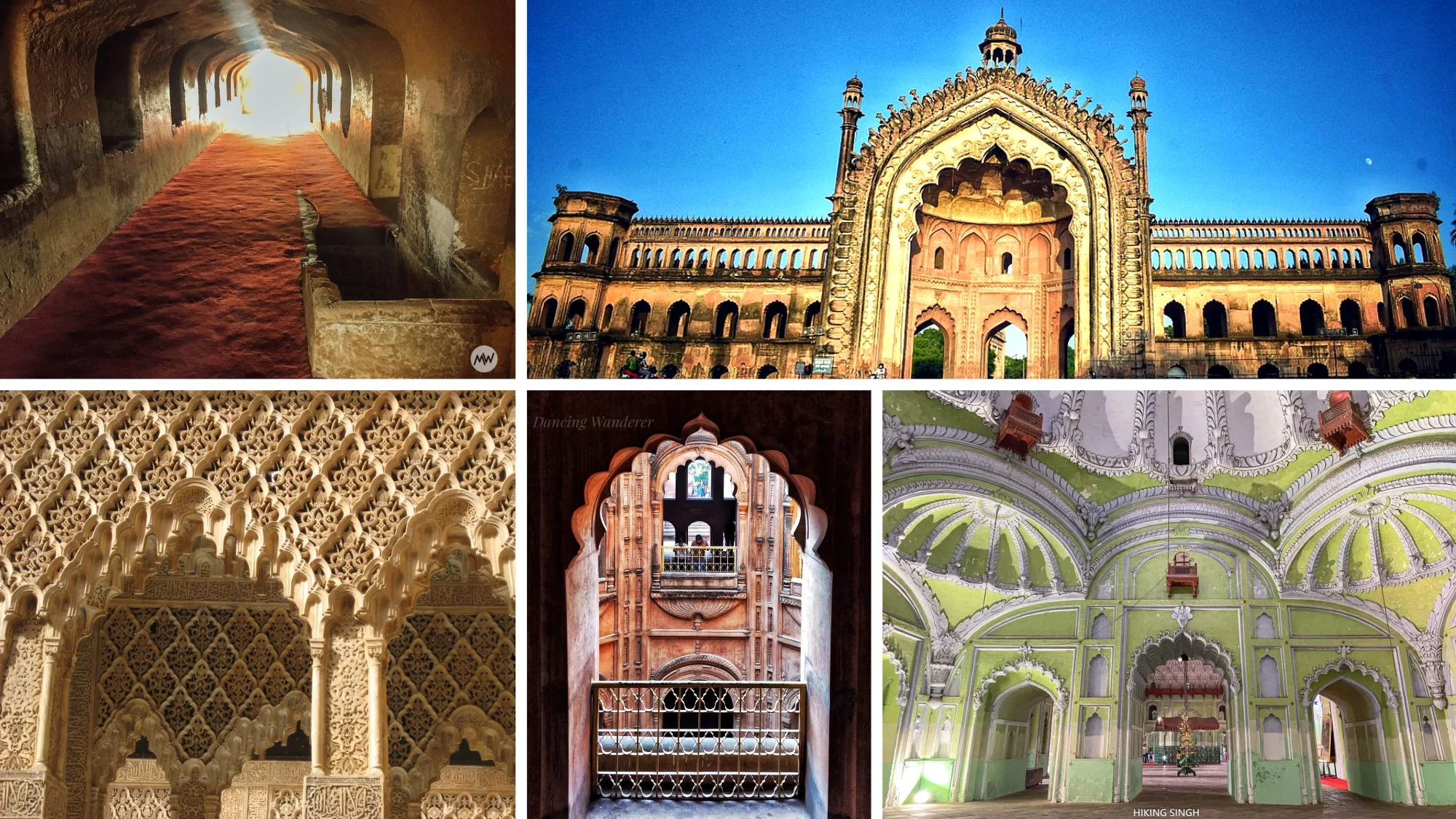
The Asafi Imambara is renowned for its stunning Islamic architecture, standing alongside mosques and mausoleums as a significant symbol of cultural heritage. The Imambara features a vast hall with an arched ceiling, notable for being constructed without the use of wood or steel. The support system relies on bow-like arches, making it one of the largest of its kind in the world.
Within the hall, visitors can admire exquisite chandeliers from Belgium and England. The Shahnasheen houses valuable Tazias (replicas of Imam Husain's Mausoleum) and Alams (symbols representing Imam Husain's group in Karbala). The graves of Nawab Asaf-ud-Daula and his consort Begum Shamsunnisa are also situated here, adding to the site's historical significance.
Visiting the Bada Imambara
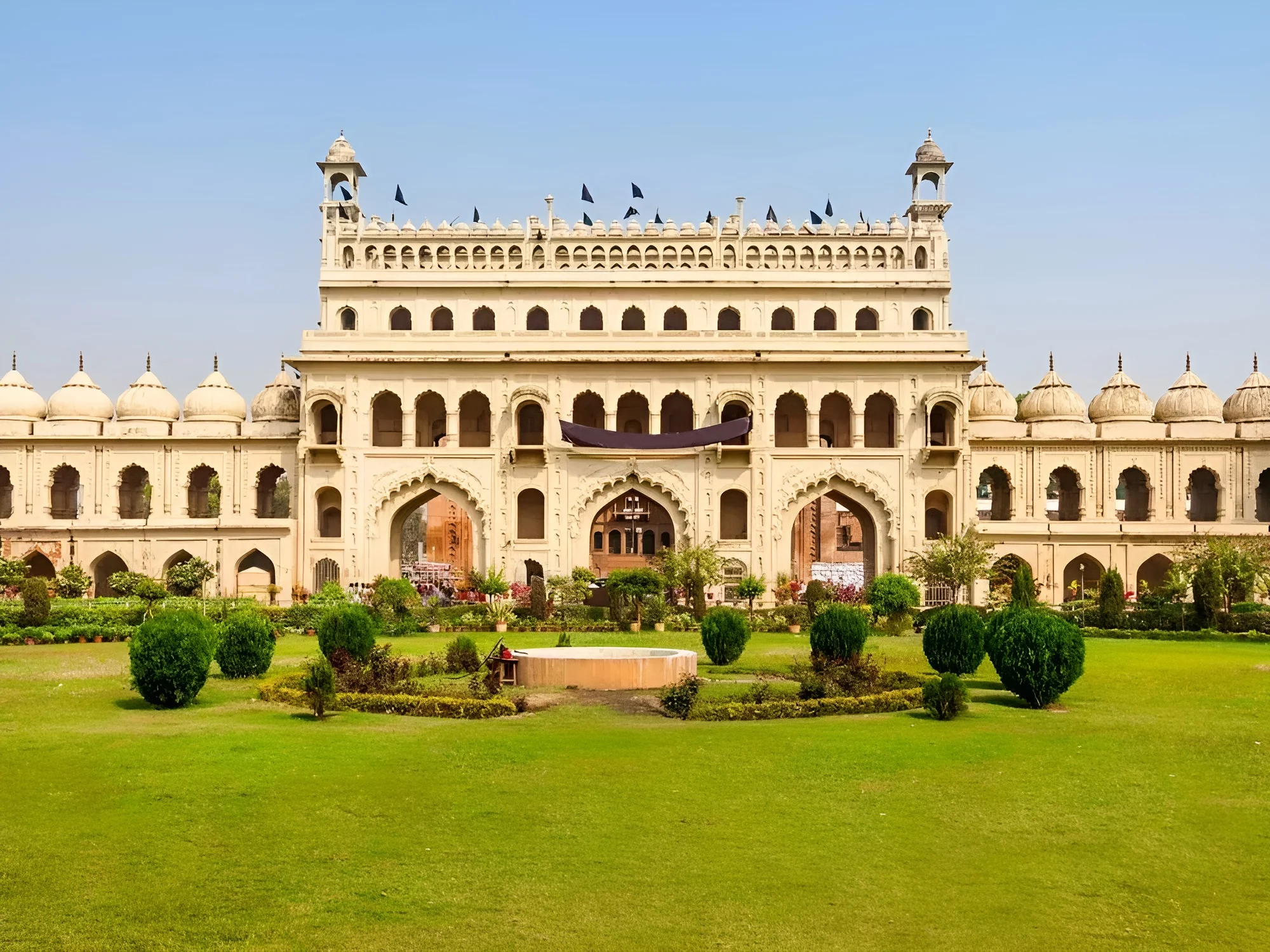
The Bara Imambara, also known as the Asafi Mosque and Imambara complex, is an impressive historical structure in Lucknow, India. Built by Nawab Asaf-ud-Daula in 1784, it is internationally renowned for its architectural grandeur, engineering marvels, and cultural heritage.
Key architectural features inside Bara Imambara:
1. Central Hall
Size and Design: The central hall is one of the largest arched constructions without support beams in the world, measuring about 50 meters long and 15 meters high.
Intricate Design: The hall features intricate Mughal architecture extensive ornamentation and stucco decorations.


2. Rumi Darwaza
Gateway: The imposing Rumi Darwaza serves as the main entrance to the complex. It is an architectural marvel in itself, reminiscent of Turkish design, particularly the gateways of Constantinople.
3. Asafi Mosque
Mosque Structure: Within the complex, the Asafi Mosque stands out with its symmetrical design, typical of Mughal architecture. The mosque is known for its domes and minarets.
Decoration: The mosque's interiors are adorned with intricate calligraphy and floral patterns.


4. The Baoli
(Stepwell)
Water Reservoir: The Baoli is a stepwell used to collect water. It has a distinctive structure with steps leading down to the water, reflecting.
5. Labyrinth
(Bhulbhulaiya)
Complex Pathways: The labyrinth is a major attraction with its network of narrow passages and stairways. It was designed to confuse intruders, adding a strategic defensive element.
Acoustic Features: The design allows sound to travel distinctly, enabling communication across different parts of the building without modern technology.


6. Courtyards
Open Spaces: The courtyards within the complex are vast, with manicured gardens and water features, typical of Mughal architectural landscapes.
7. Chhatris and
Jharokhas
Pavilions and Windows: The structure includes several chhatris (elevated, dome-shaped pavilions) and jharokhas (overhanging enclosed balconies), adding to its aesthetic and functional design.


8. Stucco
Decorations
Detailed Work: : The interiors are richly decorated with stucco work, featuring floral and geometric patterns, showcasing the artisanship of the period.
9. No Usage
of Iron or Wood
Construction Technique: Remarkably, the Bara Imambara was constructed without using iron or wood, relying instead on bricks and lime plaster, which showcases the advanced engineering skills of that era.


10. Ceiling
Design
Vaulted Ceilings: : The ceilings in various parts of the Imambara are vaulted, with some featuring intricate designs and others left plain to emphasize the structure's vastness and strength.


